
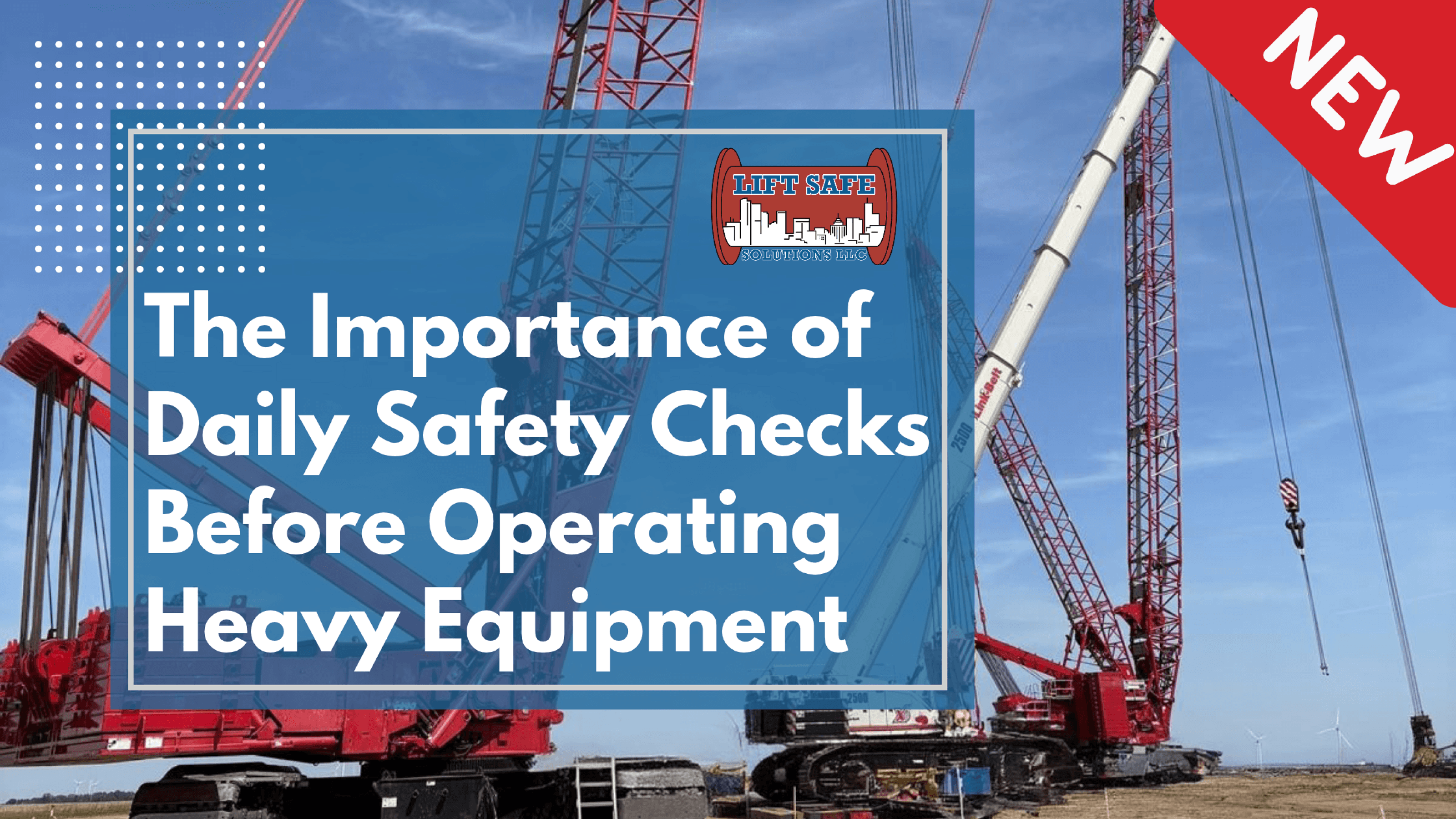
Every safe workday starts before the equipment is turned on.
Heavy equipment operators work with powerful machines in environments where conditions can change quickly. Taking a few minutes before operation to evaluate the equipment and surrounding work area can help identify potential hazards before they become bigger problems.
At Lift Safe Solutions, we believe daily safety checks are an important part of developing responsible operators and creating safer jobsites.
Start With the Work Area
A safety check shouldn't focus only on the machine. Operators should also evaluate the environment where the equipment will be used.
Before beginning work, look for potential hazards such as uneven or unstable ground, overhead obstructions, nearby workers, moving vehicles, power lines, restricted spaces, and changes to established traffic patterns.
Conditions can change from one shift to another, so an area that was safe yesterday should still be evaluated today.
Walk Around the Equipment
A visual walk-around can help operators identify obvious signs of damage or unusual conditions.
Depending on the type of equipment, operators may need to look for fluid leaks, damaged tires or tracks, loose or missing components, structural damage, worn lifting components, and other visible concerns.
The goal is to become familiar enough with the equipment that unusual conditions stand out.
Check Safety Devices and Controls
Safety-related systems should be included in pre-operation checks.
Operators may need to verify the condition and function of items such as seat belts, horns, alarms, lights, gauges, controls, mirrors, and other equipment-specific safety devices.
If something doesn't operate as expected, the concern should be addressed according to the organization's procedures before work continues.
Don't Ignore Small Warning Signs
Some equipment problems begin with subtle changes.
An unfamiliar noise, unusual vibration, warning light, different response from a control, or visible leak may indicate that something needs attention.
Operators should understand the normal behavior of the equipment they use and know how to report anything unusual.
Continuing to operate equipment when a potential problem has been identified can create unnecessary risk.
Communication Is Part of the Check
Operators rarely work completely alone.
Before equipment begins moving, everyone involved in the operation should understand the work plan and communication procedures.
This can be especially important when spotters, signal persons, ground personnel, or multiple pieces of equipment are working in the same area.
Clear communication helps reduce confusion and keeps everyone aware of what is happening around them.
Avoid the “I've Done This a Hundred Times” Mindset
Experience is valuable, but routine can sometimes lead to complacency.
When employees perform the same task regularly, it's easy to assume that today's conditions will be the same as yesterday's.
A consistent pre-operation routine helps operators slow down long enough to evaluate what may have changed.
Even experienced operators benefit from approaching each shift with attention and awareness.
Training Helps Operators Know What to Look For
A checklist is most effective when the person completing it understands what each item means.
Proper equipment training can help operators recognize potential hazards, understand equipment limitations, identify abnormal conditions, and know when a concern needs to be reported.
Hands-on training can be particularly valuable because operators have an opportunity to apply safety concepts directly to equipment.
Make Safety the First Task of Every Shift
Daily safety checks don't need to be complicated to be valuable.
Creating a consistent routine of evaluating the equipment, work area, safety devices, and communication plan helps make hazard awareness part of everyday operations.
When operators know what to look for and feel comfortable reporting concerns, organizations can build stronger safety habits across the entire workforce.
Lift Safe Solutions provides equipment and safety training designed to help operators develop the knowledge, skills, and awareness needed for safer workplaces.
Contact Lift Safe Solutions to learn more about available operator and safety training programs.