
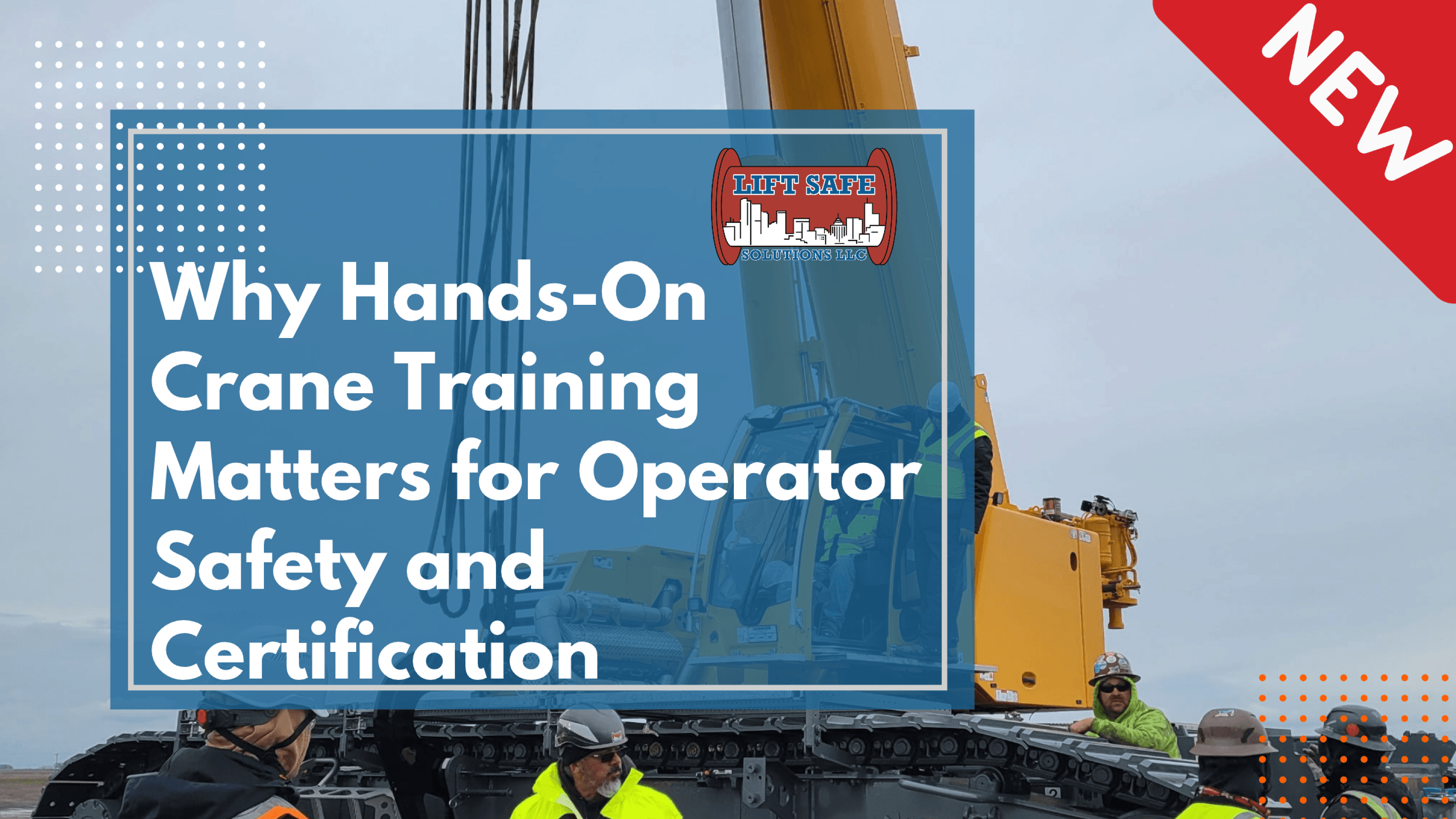
Operating a mobile crane requires more than knowing which controls move the machine. Operators must understand how the equipment responds, recognize potential hazards, follow proper procedures, and make informed decisions while working in changing jobsite conditions.
That's why hands-on crane training is such an important part of developing knowledgeable and confident operators.
At Lift Safe Solutions, practical training gives operators an opportunity to take what they've learned and apply it to real equipment in a controlled training environment.
Classroom Knowledge Is Only the Beginning
Classroom instruction provides an important foundation. Operators can learn about safety procedures, equipment terminology, load considerations, inspections, and operational responsibilities.
However, operating equipment requires those concepts to be applied in practice.
Hands-on training helps bridge the gap between understanding a procedure and performing it correctly.
Operators can become more familiar with controls, equipment movement, positioning, communication, and the careful decision-making required during crane operations.
Developing Confidence Without Sacrificing Safety
Confidence is important for an equipment operator, but it should come from knowledge and experience—not shortcuts.
Practical training allows operators to become more comfortable with equipment while reinforcing safe operating practices.
Repeated practice can help operators develop better habits and become more aware of how their actions affect the equipment, load, and people working nearby.
Preparing for NCCCO Certification
For operators pursuing NCCCO certification, preparation may involve both knowledge-based and practical components.
Hands-on preparation gives candidates an opportunity to become familiar with the skills they may need to demonstrate during a practical examination.
For mobile crane operators pursuing certifications such as TLL Swing Cab, practicing equipment operation under knowledgeable instruction can help candidates identify areas where they need additional improvement before testing.
Training should not focus solely on passing an exam, however. Certification preparation is also an opportunity to reinforce the skills operators will use throughout their careers.
Training Helps Reinforce Safe Habits
Every crane operation requires attention.
Operators must remain aware of equipment condition, surrounding hazards, communication, worksite conditions, and the task being performed.
Hands-on training allows instructors to identify habits that may need correction before they become routine.
That feedback can be extremely valuable, particularly for operators who are still developing their skills.
Certification Isn't the End of Training
Earning a certification is an important professional milestone, but learning shouldn't stop there.
Equipment changes. Jobsites change. Operators encounter different conditions and responsibilities throughout their careers.
Continuing education and refresher training can help operators maintain their knowledge and reinforce safe practices.
Organizations that invest in ongoing operator development aren't simply preparing employees for certification—they're investing in a stronger safety culture.
Build Safer, More Confident Operators
Effective crane training combines knowledge, practical experience, and a commitment to safe operation.
Lift Safe Solutions provides hands-on equipment and safety training designed to help operators develop the skills and knowledge needed for safer workplaces.
Contact Lift Safe Solutions to learn more about mobile crane training, certification preparation, and available safety training programs.