
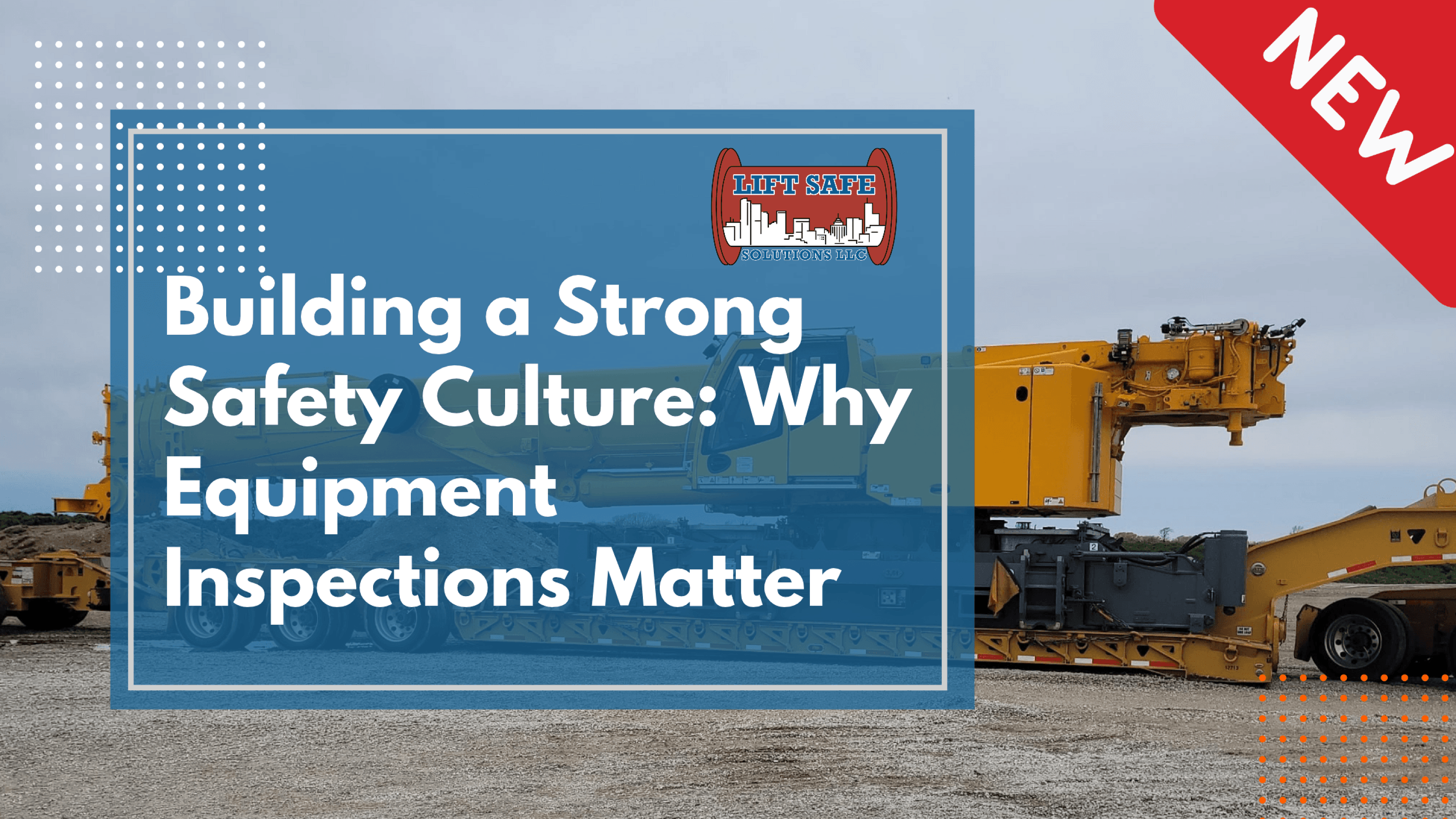
Safety on a jobsite doesn't begin when equipment starts moving. It begins before the first lift, load, or task of the day.
Routine equipment inspections are one of the most important parts of a strong workplace safety program. Whether your team operates cranes, forklifts, aerial lifts, or other heavy equipment, taking the time to inspect machinery before use can help identify potential problems, reduce unnecessary risks, and create safer working conditions for everyone on the jobsite.
At Lift Safe Solutions, we believe equipment inspections are more than another item on a checklist. They're an important part of building a safety culture where operators understand their equipment, recognize hazards, and take responsibility for safe operation.
Why Equipment Inspections Matter
Heavy equipment operates under demanding conditions. Components experience wear, hydraulic systems are placed under pressure, tires and tracks encounter challenging surfaces, and safety devices must continue to perform as intended.
Even equipment that operated normally during the previous shift can develop an issue before its next use.
A consistent inspection process gives operators an opportunity to identify visible damage, unusual wear, leaks, missing components, or other concerns before they become more serious.
More importantly, inspections encourage operators to become familiar with the condition of the equipment they use every day.
What Should Operators Look For?
The exact inspection requirements will vary depending on the equipment, manufacturer recommendations, work environment, and applicable regulations. However, operators should develop a consistent approach to evaluating equipment before operation.
A typical pre-use inspection may include checking:
- Tires, wheels, tracks, and visible structural components
- Hydraulic hoses, fittings, and cylinders for damage or leaks
- Fluid levels and signs of leakage
- Controls, gauges, alarms, and warning indicators
- Brakes and steering systems
- Lights, horns, backup alarms, and other safety devices
- Forks, attachments, hooks, chains, or lifting components
- Seat belts and operator-restraint systems
- Guards and other protective components
- The surrounding work area for potential hazards
Operators should also pay attention to anything that looks, sounds, or feels different from normal operation.
A checklist is valuable, but operator awareness is just as important.
Inspections Are Part of a Bigger Safety Culture
A strong safety culture isn't created by policies alone. It develops when safe practices become part of the team's everyday routine.
Pre-use inspections provide an opportunity to reinforce that mindset.
When operators consistently inspect their equipment, report concerns, and communicate potential hazards, safety becomes a shared responsibility rather than something addressed only after a problem occurs.
Supervisors and employers also play an important role. Operators should understand how to document concerns, who to notify, and what steps to take when equipment may not be safe to operate.
Employees should never feel pressured to overlook a potential safety issue simply to keep a job moving.
Training Makes Inspections More Effective
Providing an inspection checklist is only one part of the process. Operators also need to understand what they're looking for and why it matters.
Effective equipment safety training can help operators recognize common hazards, understand equipment limitations, identify warning signs, and know when a condition should be reported or evaluated further.
Hands-on training is especially valuable because operators can learn how inspection procedures apply to the equipment they actually use.
The goal isn't simply to complete a checklist. It's to develop operators who can recognize when something isn't right.
Documentation and Communication Matter
Finding a potential issue is only helpful if that information reaches the right people.
Organizations should establish clear procedures for documenting inspections and reporting equipment concerns. Depending on the situation, equipment may need to be evaluated, repaired, or removed from service before being operated again.
Good communication between operators, supervisors, safety professionals, and maintenance teams helps prevent small issues from becoming larger problems.
Documentation can also help organizations identify recurring equipment concerns and improve preventive maintenance planning.
Small Habits Can Make a Big Difference
Jobsite safety often comes down to consistent habits.
Taking a few minutes to inspect equipment before operation may seem routine, but those minutes provide an important opportunity to identify hazards before employees and equipment are placed at risk.
When inspections, communication, and training work together, organizations can create an environment where safety becomes part of every task—not simply a requirement to complete.
Make Safety Part of Every Workday
Equipment inspections are one piece of a comprehensive safety program, but they're an important one.
Investing in proper training can help operators understand their equipment, recognize potential hazards, and develop safer habits that carry into everyday operations.
Lift Safe Solutions provides safety and equipment training designed to help organizations build knowledgeable, confident, and safety-focused teams.
Contact Lift Safe Solutions to learn more about available training programs and how we can help support your organization's safety goals.
SEO Information
SEO Title: Equipment Inspections & Jobsite Safety | Lift Safe Solutions
Meta Description: Learn why routine equipment inspections are essential for jobsite safety and how proper operator training can help identify hazards and build a stronger safety culture.
Primary Keyword: equipment safety inspections
Secondary Keywords: heavy equipment inspections, equipment safety training, jobsite safety, pre-use equipment inspection, workplace safety training, operator safety, heavy equipment safety