
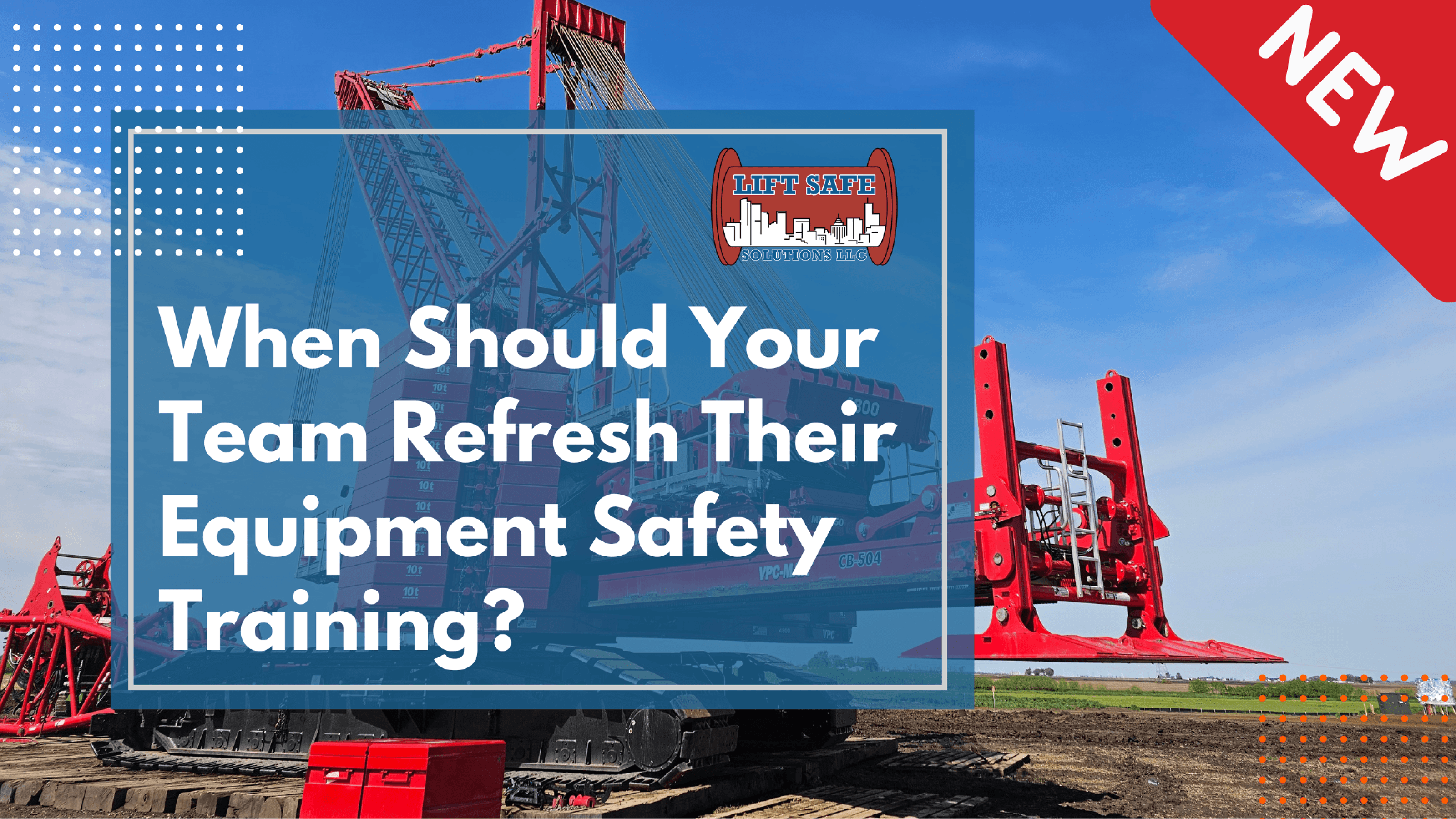
Safety training shouldn't be viewed as something employees complete once and never revisit.
Even experienced operators can benefit from refresher training as equipment, responsibilities, workplace conditions, and safety requirements evolve.
The question for many employers is: when should additional training happen?
While specific training requirements depend on the equipment, workplace, applicable standards, and individual circumstances, there are several situations where employers should evaluate whether additional instruction is needed.
When Employees Begin Operating Different Equipment
Experience with one machine doesn't automatically qualify an employee to operate another.
Different equipment can have different controls, capacities, limitations, inspection procedures, and hazards.
Before assigning employees to unfamiliar equipment, employers should make sure they have received the appropriate training and understand how to operate it safely.
After an Incident or Near Miss
Incidents and near misses provide important opportunities to evaluate existing procedures.
Instead of focusing only on what happened, organizations should ask why it happened and whether additional training could help prevent a similar situation.
A near miss may reveal gaps in communication, hazard recognition, equipment knowledge, or established procedures.
Addressing those gaps early can strengthen the overall safety program.
When Unsafe Operating Habits Are Observed
Supervisors shouldn't wait for an incident before addressing unsafe behavior.
If an operator is observed skipping inspections, using equipment improperly, ignoring established procedures, or demonstrating other concerning habits, additional instruction may be appropriate.
Early intervention can help correct unsafe habits before they become routine.
When Workplace Conditions Change
New projects can introduce unfamiliar hazards.
Changes in terrain, work areas, equipment, materials, traffic patterns, or job responsibilities may require employees to adapt how they perform their work.
Training can help teams understand those new conditions and prepare accordingly.
When Knowledge Has Faded
People forget information—particularly procedures they don't use regularly.
Refresher training gives employees an opportunity to revisit important concepts, ask questions, and reinforce safe operating practices.
It can also help experienced operators identify habits they've developed over time that may not align with current procedures.
Don't Treat Training as a Checkbox
The goal of safety training shouldn't simply be completing a requirement.
Effective training should help employees understand their responsibilities and give them knowledge they can apply during actual work.
Organizations that treat training as an ongoing process can create teams that are better prepared to recognize hazards and respond appropriately.
Invest in Continued Operator Development
Your workforce is one of your organization's most valuable safety resources.
Giving employees opportunities to refresh their knowledge and develop their skills can contribute to safer and more efficient operations.
Lift Safe Solutions offers equipment and safety training programs designed to support operators throughout their careers.
Contact Lift Safe Solutions to discuss your organization's training needs.