
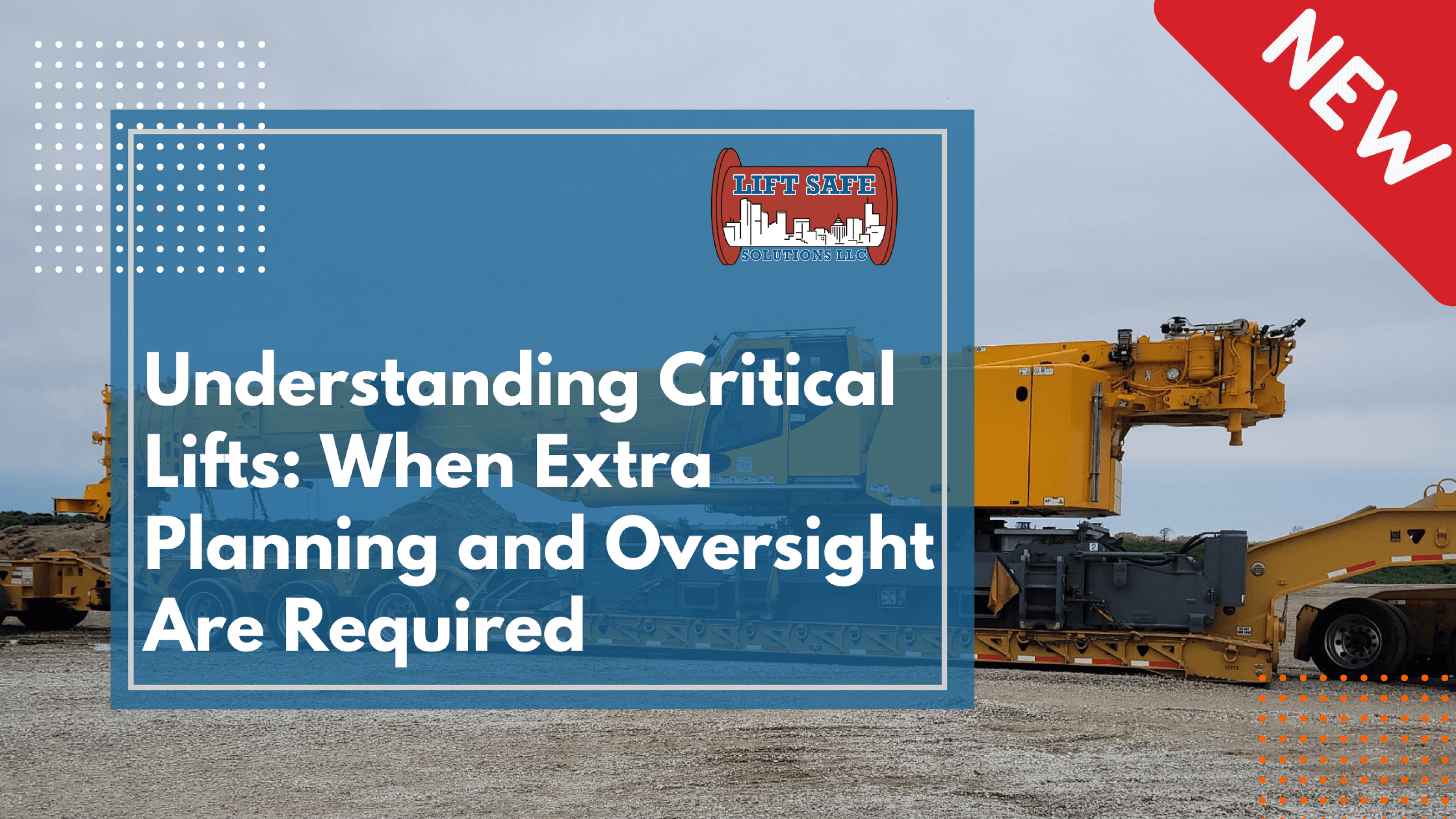
Not all crane lifts are created equal. Some lifts carry significantly higher risk due to load complexity, environmental conditions, or proximity to personnel and structures. These are known as critical lifts, and they demand a higher level of planning, review, and oversight.
Not all crane lifts are created equal. Some lifts carry significantly higher risk due to load complexity, environmental conditions, or proximity to personnel and structures. These are known as critical lifts, and they demand a higher level of planning, review, and oversight.
Understanding when a lift qualifies as “critical” is essential for maintaining a safe jobsite.
What Defines a Critical Lift?
A critical lift typically involves one or more of the following factors:
- Loads exceeding a high percentage of the crane’s rated capacity
- Multiple cranes working together
- Lifts over occupied areas or active facilities
- Lifts near power lines or critical infrastructure
- Loads that are unstable, unusually shaped, or difficult to rig
When any of these conditions exist, additional precautions are required.
Why Critical Lifts Carry Higher Risk
Critical lifts leave little margin for error. A miscalculation, equipment failure, or communication breakdown can result in severe injury, property damage, or fatalities.
Because of this, regulatory bodies and industry best practices require enhanced planning and documentation for these operations.
Key Elements of a Critical Lift Plan
A critical lift plan goes beyond standard lift documentation and often includes:
- Detailed engineering calculations
- Review and approval by qualified professionals
- Specific contingency and emergency procedures
- Enhanced supervision during execution
- Strict communication protocols
This level of detail ensures every potential risk is evaluated and mitigated.
Training and Competency Matter
Critical lifts should only be executed by trained, qualified personnel. This includes operators, riggers, signal persons, and supervisors who understand both the equipment and the risks involved.
Ongoing training and third-party evaluations help ensure crews remain compliant with safety standards and best practices.
The Value of Third-Party Oversight
Independent lift planning and safety oversight can significantly reduce risk during critical lifts. Third-party experts provide objective assessments, identify blind spots, and ensure compliance with OSHA and industry guidelines.
Final Thoughts
Critical lifts demand respect, preparation, and expertise. Treating them like routine operations is a costly mistake. With proper planning, training, and oversight, even the most complex lifts can be executed safely.
Companies that partner with Lift Safe Solutions gain access to experienced professionals who specialize in critical lift planning, safety audits, and compliance—helping ensure every lift is done right the first time.