
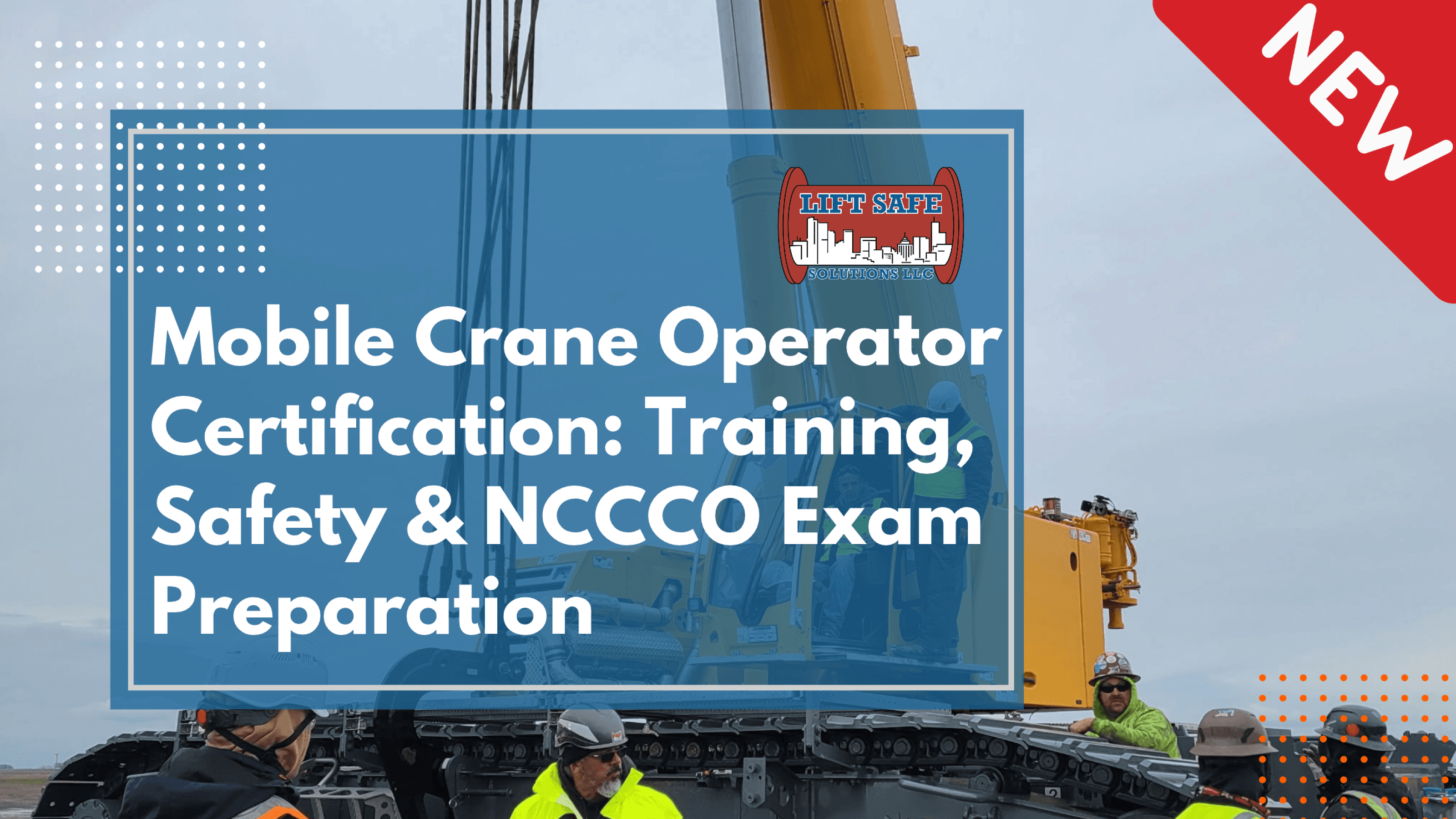
Learn why mobile crane operator certification matters for workplace safety and OSHA compliance. Discover NCCCO exam preparation tips, essential crane safety practices, and how proper training helps operators improve their skills and reduce job site risks.
Mobile Crane Operator Certification: Training, Safety & NCCCO Exam Preparation
Operating a mobile crane requires more than technical skills. It demands proper training, a thorough understanding of lifting operations, and the ability to recognize potential hazards before they become serious safety risks.
For construction companies, industrial facilities, and lifting professionals, mobile crane operator certification plays an essential role in maintaining workplace safety, meeting regulatory requirements, and improving operational efficiency.
Whether you're an experienced crane operator preparing for certification or an employer looking to strengthen your team's qualifications, understanding the training and certification process is an important step toward safer lifting operations.
At Lift Safe Solutions (LSS), we believe that proper training and ongoing safety education are fundamental to creating safer, more productive workplaces.
What Is Mobile Crane Operator Certification?
Mobile crane operator certification is a formal process used to assess an individual's knowledge and practical ability to operate specific types of mobile cranes safely.
In the United States, the National Commission for the Certification of Crane Operators (NCCCO), operating through its CCO certification programs, is a widely recognized organization offering crane operator certifications.
Certification assessments generally address essential topics such as:
- Crane setup and operational procedures
- Understanding and interpreting load charts
- Identifying lifting hazards and job site risks
- Equipment inspection and maintenance awareness
- Crane stability and load capacity limitations
- Safe lifting and load-handling techniques
- Applicable safety standards and operating requirements
Certification demonstrates that an operator has met the testing requirements for a particular equipment category. However, certification alone does not replace an employer's responsibility to evaluate the operator's ability to perform assigned work safely.
Why Is Mobile Crane Operator Certification Important?
1. Improving Job Site Safety
Mobile crane operations involve significant risks, including equipment instability, dropped loads, power line contact, and improper rigging practices.
Proper training helps operators recognize these hazards, understand equipment limitations, and make informed decisions during lifting operations.
2. Supporting OSHA Compliance
The Occupational Safety and Health Administration (OSHA) establishes requirements for crane operator training, certification or licensing, and employer evaluation under 29 CFR 1926.1427.
For covered construction crane operations, employers must ensure operators meet applicable requirements before performing assigned work.
Employers must also evaluate operators to verify that they possess the necessary knowledge, skills, and ability to recognize and avoid hazards associated with their equipment and assigned lifting activities.
3. Reducing Equipment Damage and Downtime
Improper crane operation can lead to equipment damage, costly repairs, and unexpected project delays.
Training helps operators understand equipment capabilities, follow proper procedures, and recognize warning signs that may indicate unsafe operating conditions.
4. Strengthening Workforce Qualifications
Certified crane operators can demonstrate that they have completed recognized assessments of their technical knowledge and practical skills.
For employers, investing in crane operator training and certification preparation supports workforce development and helps establish consistent safety expectations.
Understanding NCCCO Mobile Crane Certification Requirements
The NCCCO mobile crane certification process evaluates both theoretical knowledge and practical operating skills.
Candidates pursuing applicable CCO mobile crane certifications must successfully complete the required written and practical examinations for their selected certification categories.
Written Examinations
Written assessments evaluate the knowledge required to operate cranes safely.
Important subject areas may include:
- Crane terminology and operating principles
- Load charts and lifting capacity calculations
- Site preparation and ground conditions
- Equipment setup and operational limitations
- Safe operating procedures
- Hazard recognition and emergency response
- Applicable regulations and industry standards
Understanding these subjects is essential not only for certification testing but also for making safe decisions during actual lifting operations.
Practical Examinations
Practical examinations assess an operator's ability to demonstrate essential crane operating skills.
Depending on the crane category and applicable examination requirements, candidates may be evaluated on equipment inspection, operational control, load handling, maneuvering, and safe shutdown procedures.
Hands-on mobile crane training can help candidates become more familiar with crane controls, operating procedures, and the practical skills needed for examination readiness.
How to Prepare for the NCCCO Mobile Crane Operator Exam
Preparing for crane operator certification requires a combination of technical study, practical experience, and familiarity with examination expectations.
Step 1: Understand Your Certification Category
Different crane configurations require different knowledge and operating skills.
For example, telescopic boom cranes with swing cabs have different operating characteristics from fixed-cab configurations.
Candidates should identify the appropriate certification category before beginning their preparation.
Step 2: Study Load Charts and Crane Capacity
Load chart interpretation is one of the most important skills in crane operation.
Operators must understand how factors such as boom length, operating radius, crane configuration, and counterweight arrangements affect lifting capacity.
Step 3: Review OSHA Crane Safety Requirements
Familiarity with applicable OSHA standards helps operators understand regulatory responsibilities and recognize common lifting hazards.
Important subjects include equipment inspections, power line safety, ground conditions, and operational procedures.
Step 4: Participate in Hands-On Crane Training
Practical experience helps reinforce technical knowledge.
Supervised training allows candidates to develop equipment familiarity, improve control techniques, and practice safe lifting procedures.
Step 5: Practice Hazard Recognition
Crane operators must continually assess changing job site conditions.
Training should reinforce awareness of unstable ground, overhead obstructions, weather conditions, personnel movement, and potential communication problems.
Common Mobile Crane Safety Mistakes to Avoid
Even experienced crane operators can encounter dangerous situations when essential safety procedures are overlooked.
Some common mistakes include:
Failing to inspect equipment: Skipping required inspections can allow mechanical problems or damaged components to go unnoticed.
Misinterpreting load charts: Incorrect capacity calculations can create overloading or stability hazards.
Ignoring ground conditions: Inadequate ground support can compromise crane stability.
Poor communication: Miscommunication between operators, signalpersons, and rigging personnel can increase lifting risks.
Operating outside equipment limitations: Exceeding manufacturer specifications or ignoring operational restrictions can result in serious incidents.
Insufficient preparation: Operators unfamiliar with equipment configurations or job site conditions may struggle to recognize critical hazards.
Consistent training, inspections, and effective communication are essential components of safer lifting operations.
The Importance of Ongoing Crane Safety Training
Crane operator certification is an important milestone, but workplace safety requires continuous attention.
Equipment technology, operating conditions, and job responsibilities can change over time.
Ongoing crane safety training helps operators and employers reinforce best practices, address knowledge gaps, and adapt to changing operational requirements.
Employers should also provide additional training when an operator's performance or knowledge indicates that retraining is necessary.
A proactive approach to training helps build a workplace culture where safety remains a daily priority rather than a one-time requirement.
Frequently Asked Questions About Mobile Crane Operator Certification
Is NCCCO certification required to operate a mobile crane?
For many construction crane operations covered by OSHA's crane standards, operators must meet applicable certification or licensing requirements. NCCCO offers accredited certification options, but it is not the only possible certification pathway. Requirements depend on the equipment, work, and jurisdiction.
Does NCCCO certification replace employer evaluation?
No. OSHA requires employers to evaluate operators for the equipment and work they are assigned to perform. Certification alone does not establish that an operator is qualified for every crane or lifting activity.
How long is NCCCO mobile crane certification valid?
CCO mobile crane certifications are generally valid for five years. Operators should review current CCO recertification requirements before their credentials expire.
What is the difference between crane operator training and certification?
Training develops the knowledge and skills needed for safe crane operation. Certification assesses whether a candidate meets established examination requirements.
Both contribute to workforce competency, but they serve different purposes.
Can hands-on training help with NCCCO exam preparation?
Yes. Practical training can help candidates strengthen their operating skills, become familiar with equipment controls, and prepare for practical examination tasks.
However, participation in training does not guarantee certification.
Build a Stronger Safety Culture with Lift Safe Solutions
Safe lifting operations begin with knowledgeable operators, effective training, and a commitment to following established safety procedures.
Investing in mobile crane operator training and NCCCO certification preparation can help companies strengthen workforce competency, support regulatory compliance, and reduce avoidable lifting risks.
At Lift Safe Solutions, we're committed to helping lifting professionals and organizations prioritize safety through education, training, and practical safety awareness.
Whether you're preparing for crane operator certification or looking to improve your team's understanding of safe lifting practices, taking a proactive approach to training is an investment in long-term operational success.
Contact Lift Safe Solutions today to learn more about available crane safety training and certification preparation opportunities.