
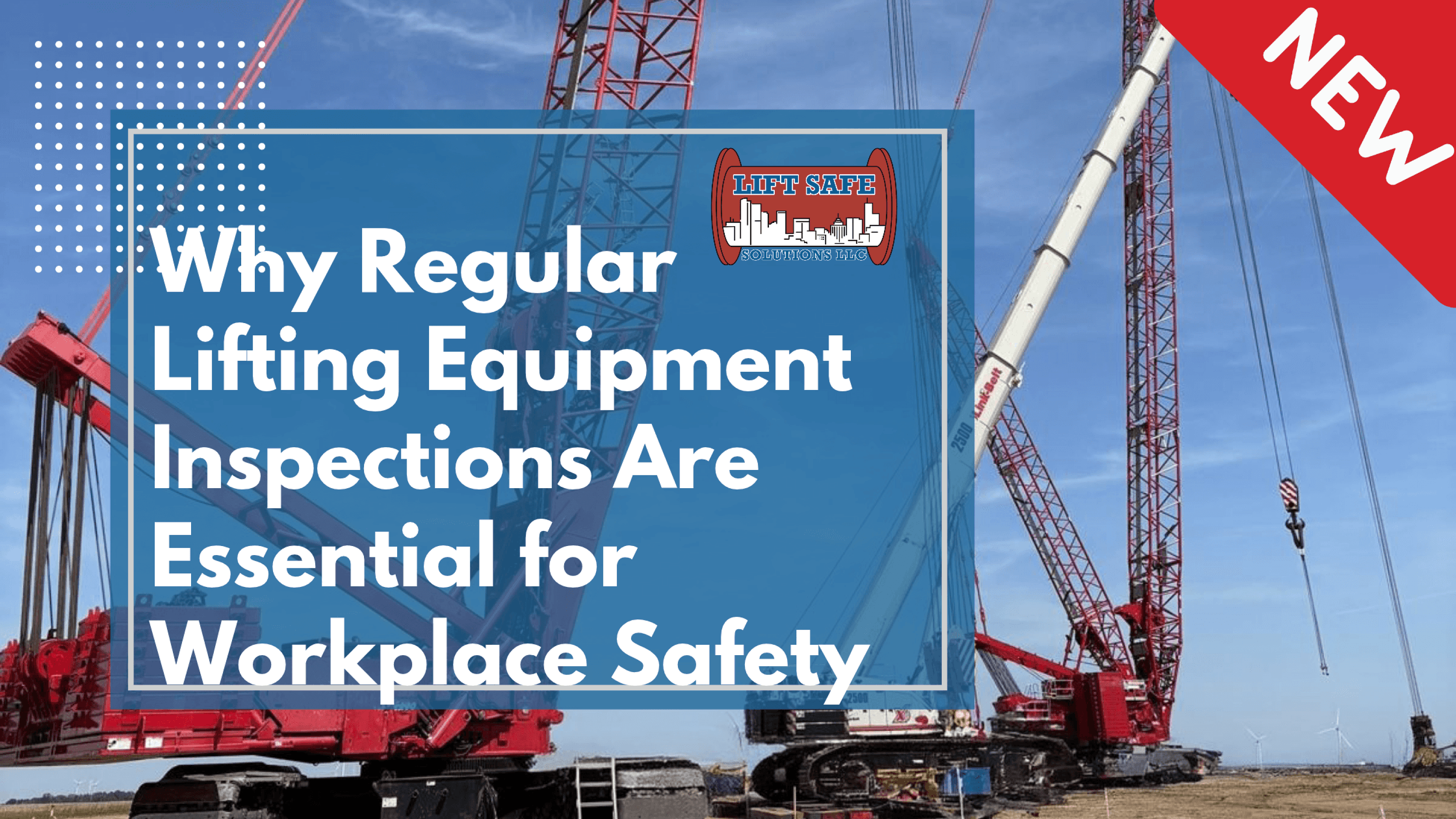
Regular lifting equipment inspections are essential for identifying hazards, preventing equipment failures, and maintaining safer workplaces. Learn how routine inspections help businesses protect workers, improve equipment reliability, and support OSHA compliance.
Why Regular Lifting Equipment Inspections Are Essential for Workplace Safety
Lifting equipment plays a critical role in construction, manufacturing, warehousing, and industrial operations. From overhead cranes and hoists to slings, rigging hardware, and other lifting devices, these tools help businesses move heavy loads efficiently. However, without proper inspections and maintenance, lifting equipment can become a serious workplace hazard.
Regular lifting equipment inspections are essential for identifying potential problems, preventing equipment failures, and maintaining safe working environments. They also help businesses meet applicable Occupational Safety and Health Administration (OSHA) requirements and reduce costly operational disruptions.
At Lift Safe Solutions (LSS), we understand that workplace safety begins with reliable equipment, knowledgeable personnel, and a proactive approach to hazard prevention.
Why Are Lifting Equipment Inspections Important?
Lifting operations involve significant risks, particularly when equipment is exposed to heavy loads, repeated use, and demanding working conditions.
Over time, components can develop wear, corrosion, cracks, deformation, or other defects that compromise their safe operation.
Routine inspections help employers and operators identify these issues before they contribute to an accident or equipment failure.
Key benefits of regular lifting equipment inspections include:
- Improved workplace safety: Identifying damaged or defective equipment helps reduce the risk of dropped loads and other lifting incidents.
- Reduced equipment downtime: Detecting problems early allows businesses to plan repairs or replacements before unexpected failures occur.
- Regulatory compliance: Documented inspections help organizations demonstrate adherence to applicable OSHA requirements.
- Longer equipment lifespan: Proper maintenance and timely repairs can help protect equipment investments.
- Greater operational efficiency: Reliable lifting equipment supports consistent productivity and smoother daily operations.
Understanding OSHA Lifting Equipment Inspection Requirements
OSHA establishes inspection requirements for various types of lifting equipment used in construction and general industry.
The specific inspection procedures, frequency, documentation, and personnel qualifications depend on the equipment type and applicable standard.
For example:
- Overhead and gantry cranes: OSHA 29 CFR 1910.179 addresses inspection requirements for covered cranes, including frequent and periodic inspections.
- Slings: OSHA 29 CFR 1910.184 establishes requirements for sling use, inspections, and removal from service in general industry.
- Construction cranes: OSHA 29 CFR 1926.1412 addresses crane inspection requirements, including shift, monthly, and annual/comprehensive inspections for covered equipment.
Employers should also follow manufacturer recommendations and applicable industry standards, which may establish additional inspection procedures.
Because requirements vary, businesses should establish inspection programs that reflect the specific equipment they operate.
Common Warning Signs of Unsafe Lifting Equipment
Recognizing early warning signs is an important part of preventing lifting equipment failures.
During inspections, personnel should look for potential hazards such as:
1. Visible Wear or Damage
Frayed wire ropes, damaged sling fibers, bent hooks, cracked components, and worn lifting hardware may indicate that equipment is no longer safe for continued use.
2. Corrosion and Rust
Exposure to moisture, chemicals, and outdoor environments can cause corrosion that weakens metal components and affects equipment reliability.
3. Hydraulic or Mechanical Problems
Fluid leaks, unusual noises, irregular movements, and malfunctioning controls can indicate mechanical issues requiring further evaluation.
4. Missing or Unreadable Identification
Equipment identification, capacity markings, and required labels should remain legible. Missing or damaged markings can create uncertainty about safe working limits.
5. Damaged Safety Components
Limit switches, brakes, warning systems, and other safety-related components must function properly to support safe equipment operation.
Equipment with defects that affect safe operation should be removed from service until the issue has been properly addressed.
How Often Should Lifting Equipment Be Inspected?
Inspection frequency depends on the equipment, operating conditions, applicable regulations, and manufacturer recommendations.
A comprehensive inspection program may include several types of inspections.
Pre-Use and Shift Inspections
Operators and designated personnel check equipment for visible damage, abnormal conditions, and other safety concerns before operation or as required by the applicable standard.
These checks help identify issues that may have developed since the previous use.
Frequent Inspections
Frequent inspections focus on components that may experience regular wear or deterioration.
Depending on the equipment and applicable requirements, these inspections may occur daily, weekly, or monthly.
Periodic Inspections
Periodic inspections involve more detailed evaluations of equipment condition and critical components.
The required frequency varies according to the equipment type, service conditions, and governing standards.
Annual or Comprehensive Inspections
Certain equipment, including construction cranes covered by OSHA 29 CFR 1926.1412, requires annual or comprehensive inspections by qualified personnel.
Not every type of lifting equipment is subject to the same annual inspection requirement, so employers must verify the rules applicable to their equipment.
The Cost of Neglecting Lifting Equipment Inspections
Skipping inspections may appear to save time, but the long-term consequences can be significant.
Unexpected Equipment Failures
Undetected wear or damage can contribute to sudden equipment failures, interrupting operations and creating potentially dangerous situations.
Expensive Repairs and Replacements
Minor defects can develop into larger mechanical problems when they are not addressed promptly.
Workplace Injuries
Defective lifting equipment can contribute to dropped loads, uncontrolled movements, and other serious workplace incidents.
Regulatory Violations
Failure to meet applicable OSHA inspection requirements can expose employers to citations, penalties, and additional compliance concerns.
Reduced Productivity
Equipment downtime can disrupt project schedules, delay deliveries, and affect overall operational efficiency.
A proactive inspection program helps businesses identify problems earlier and make better decisions about maintenance and equipment replacement.
Best Practices for an Effective Lifting Equipment Inspection Program
Businesses can strengthen workplace lifting safety by implementing consistent inspection procedures.
1. Establish a documented inspection schedule. Develop inspection procedures based on equipment type, manufacturer guidance, operating conditions, and applicable regulations.
2. Train employees to recognize hazards. Operators and other personnel should understand common signs of equipment damage and know when to report concerns.
3. Maintain accurate inspection records. Keep required inspection documentation organized and accessible. Records can also help track recurring problems and maintenance history.
4. Remove unsafe equipment from service. Equipment with defects that compromise safe operation should not be used until it has been properly evaluated and corrected.
5. Work with appropriately qualified inspection personnel. Certain inspections require competent or qualified individuals, depending on the applicable standard.
6. Review inspection procedures regularly. Update inspection programs when equipment, operating conditions, regulations, or manufacturer recommendations change.
These practices help organizations establish consistent safety expectations and reinforce accountability throughout their operations.
Building a Stronger Workplace Safety Culture
Effective lifting equipment inspections are about more than meeting regulatory requirements.
They are an essential part of creating a workplace where employees understand the importance of hazard recognition, equipment reliability, and safe operating procedures.
When employers prioritize regular inspections, provide appropriate training, and encourage employees to report concerns, safety becomes part of everyday operations.
A strong safety culture also helps organizations reduce preventable incidents and maintain more reliable lifting operations.
Improve Lifting Safety with Lift Safe Solutions
At Lift Safe Solutions, we believe that preventing lifting incidents starts with preparation, awareness, and a commitment to safe equipment operation.
Regular lifting equipment inspections help businesses identify potential hazards, protect employees, and maintain reliable equipment performance.
Whether your organization uses cranes, hoists, slings, or other lifting devices, establishing an effective inspection program is an important step toward safer and more efficient operations.
Don't wait for an equipment failure to reveal a safety problem. Contact Lift Safe Solutions today to learn more about our lifting equipment inspection services, safety training, and workplace safety solutions.