
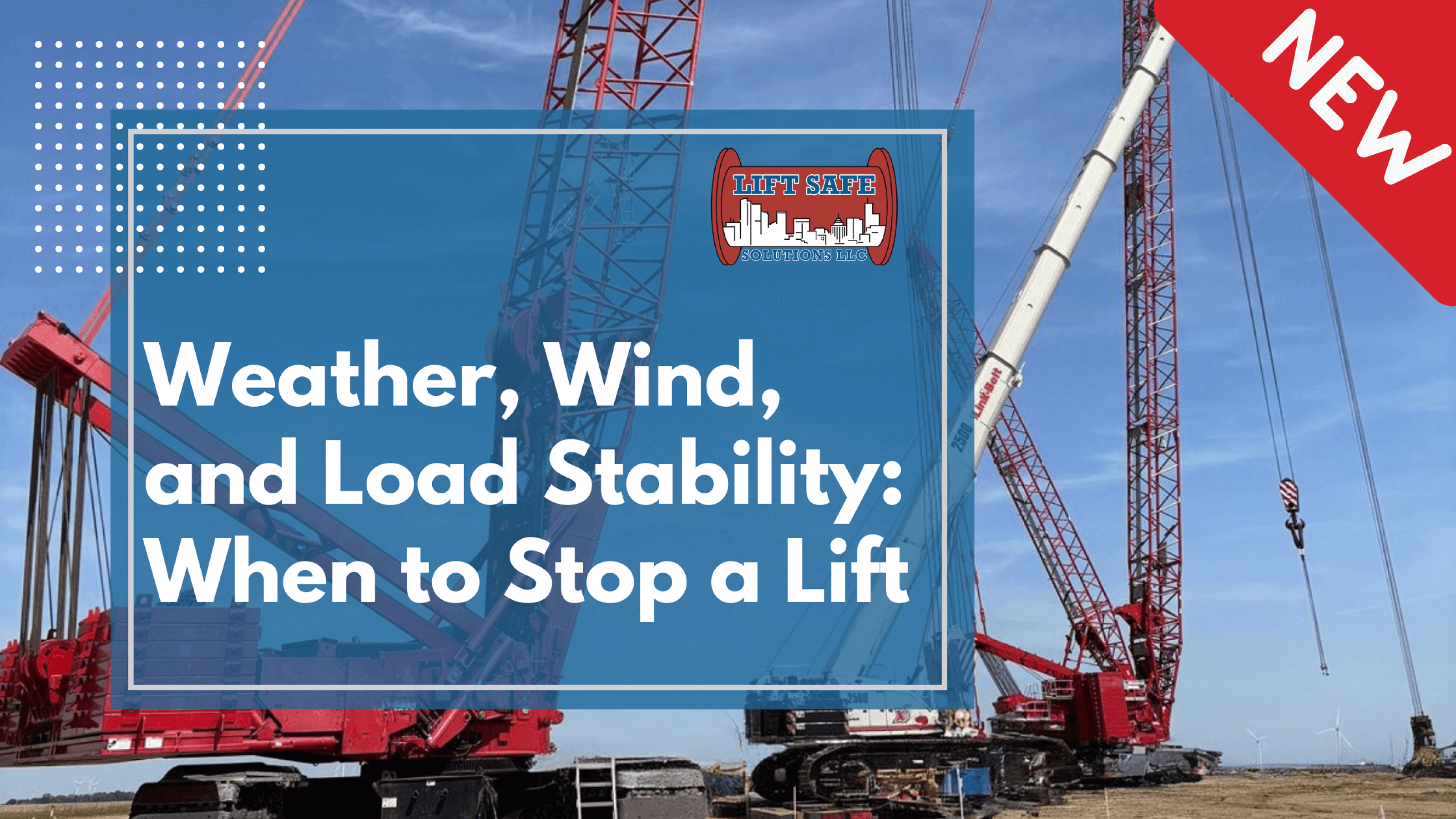
Weather is one of the most underestimated risk factors in crane and lifting operations. While many crews monitor conditions before a lift begins, changing weather during operations is often ignored—until it becomes dangerous.
Weather is one of the most underestimated risk factors in crane and lifting operations. While many crews monitor conditions before a lift begins, changing weather during operations is often ignored—until it becomes dangerous.
Understanding how wind, temperature, and environmental conditions affect load stability is critical to knowing when a lift must be stopped.
Why Weather Is a Major Lifting Hazard
Crane load charts and lift plans are based on controlled assumptions. Weather introduces unpredictable forces that can compromise:
- Load control
- Crane stability
- Rigging performance
- Operator visibility
Ignoring these variables can turn a controlled lift into a high-risk operation in seconds.
Wind: The Most Dangerous Environmental Factor
Wind does not need to be extreme to create serious hazards.
How Wind Impacts Lifts
- Causes load sway and rotation
- Increases side loading on the crane
- Reduces operator control and precision
- Amplifies the sail effect of large or irregular loads
Even moderate gusts can exceed safe limits, especially for tall cranes or large surface-area loads.
Temperature and Equipment Performance
Cold temperatures can:
- Affect hydraulic systems
- Reduce material flexibility
- Increase brittleness in rigging components
Hot conditions, on the other hand, can impact operator fatigue and equipment efficiency. Seasonal weather shifts—common in February—require constant reassessment.
Visibility and Ground Conditions
Rain, fog, or dust can limit visibility, increasing the risk of miscommunication and positioning errors. Wet or frozen ground conditions can also compromise crane setup and stability.
When a Lift Should Be Stopped
A lift should be paused or stopped when:
- Wind speeds approach or exceed manufacturer limits
- Load sway becomes difficult to control
- Visibility prevents clear communication
- Ground or weather conditions change unexpectedly
- Any crew member raises a safety concern
Stopping work is not a failure—it is a safety decision that prevents accidents.
The Importance of Stop-Work Authority
Crews must clearly understand:
- Who can stop a lift
- That stopping work is supported—not punished
- That safety always outweighs schedule pressure
Strong safety cultures treat stop-work authority as a critical control, not an obstacle.
Proactive Weather Risk Management
Best practices include:
- Continuous weather monitoring during lifts
- Clear wind speed thresholds
- Regular reassessment of site conditions
- Immediate response plans when conditions change
Organizations that plan for environmental risk significantly reduce incident rates.
Protecting People and Projects Through Smart Decisions
Weather-related lift incidents are almost always preventable. By recognizing environmental hazards early and empowering crews to stop work, companies protect their people, equipment, and timelines.
Smart lifting operations understand one simple truth: the safest lift is the one that waits for the right conditions.