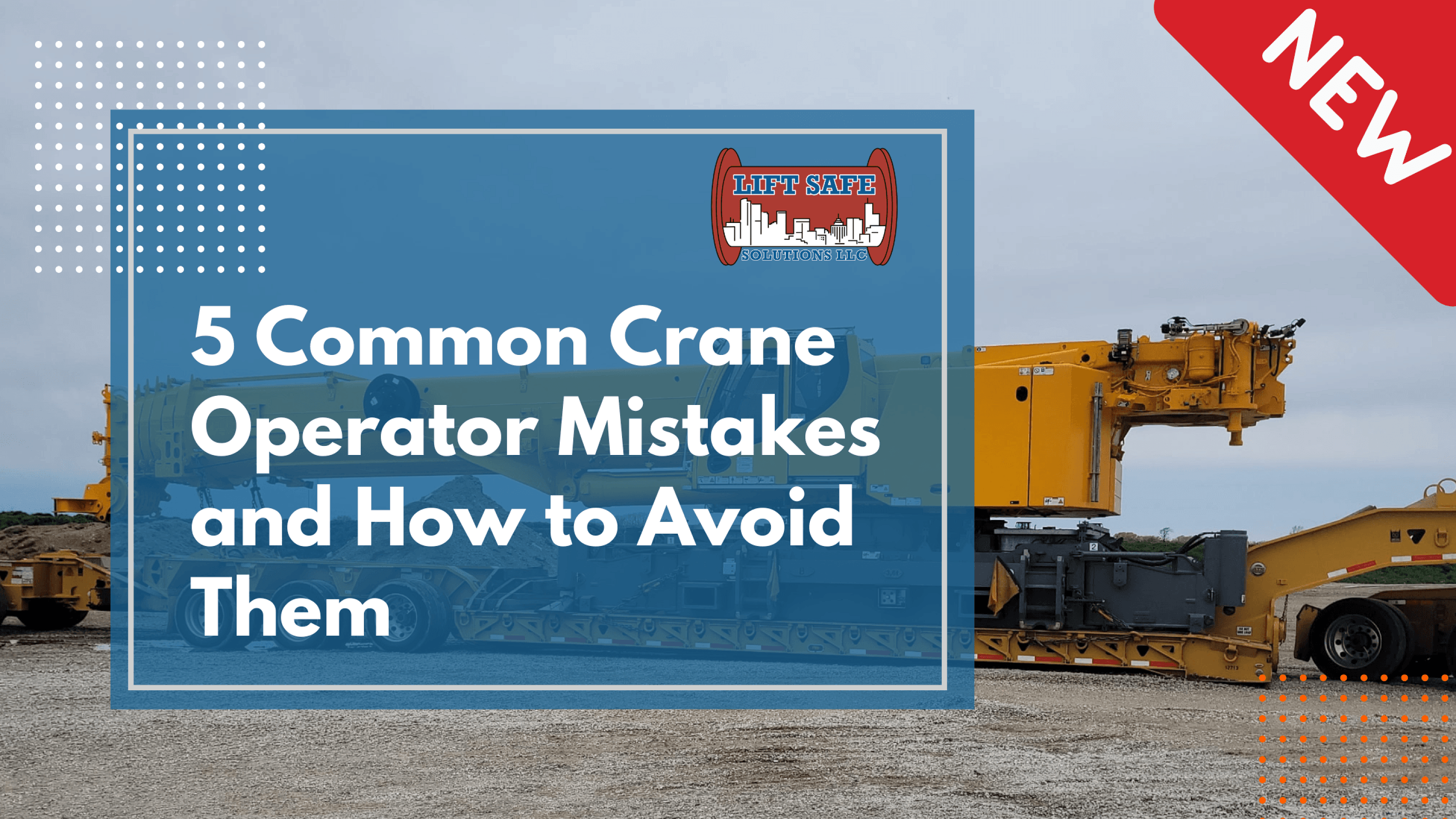
Discover five common crane operator mistakes, their potential safety risks, and practical ways proper training can help prevent them.
Crane Safety Begins With the Right Decisions
Operating a crane requires precision, technical knowledge, and constant awareness of the surrounding environment. Even small mistakes can create serious risks when heavy loads, complex equipment, and multiple workers are involved.
While crane operators undergo training to develop essential skills, understanding common operating mistakes is equally important.
Recognizing these risks can help operators make better decisions, strengthen workplace safety practices, and reduce the likelihood of preventable incidents.
Here are five mistakes crane operators should understand and actively work to avoid.
1. Misinterpreting Load Charts
A crane's load chart provides critical information about its lifting capabilities under specific configurations and conditions.
One common mistake is assuming a crane can safely lift a load simply because the weight is below the equipment's maximum advertised capacity.
Actual lifting capacity depends on factors such as operating radius, boom length, crane configuration, and setup conditions.
How to avoid it:
Operators should receive proper instruction in reading and interpreting the load charts for the equipment they operate.
Before a lift, the operator must verify that the planned operation falls within the crane's rated capacity and applicable operating limitations.
2. Overlooking Ground Conditions
Crane stability depends heavily on proper setup.
Soft soil, underground utilities, uneven surfaces, and inadequate support can create hazardous conditions.
Even when a crane is correctly configured, poor ground conditions may compromise its stability.
How to avoid it:
Ground conditions should be evaluated before equipment setup.
Appropriate supporting materials, including mats or other engineered solutions when necessary, should be selected according to site conditions and equipment requirements.
Operators and responsible site personnel must understand the importance of proper ground support.
3. Inadequate Communication
Crane operations often involve several individuals, including operators, riggers, signalpersons, and supervisors.
Miscommunication can lead to unexpected equipment movement, improperly positioned loads, and dangerous situations.
How to avoid it:
Establish clear communication procedures before lifting operations begin.
Use the appropriate signals or communication systems, confirm responsibilities, and stop operations when communication becomes unclear or unreliable.
Effective communication is essential to maintaining control of the lifting process.
4. Skipping Equipment Inspections
Crane inspections help identify problems before equipment is placed into service.
Overlooking damaged components, malfunctioning controls, or other deficiencies can increase the risk of equipment failure.
How to avoid it:
Complete the inspections required by applicable regulations, manufacturer instructions, and company procedures.
Any identified deficiency affecting safe operation must be addressed appropriately before the equipment is used.
Inspections should never be treated as a formality.
5. Becoming Overconfident With Experience
Experienced operators often develop strong technical skills and practical judgment.
However, familiarity with equipment can sometimes lead to complacency.
Assuming that a familiar lift presents no new risks can result in overlooked hazards.
How to avoid it:
Approach each lifting operation with the same attention to planning, equipment limitations, and environmental conditions.
Continue developing professional skills through appropriate training and refresher education.
Experience is valuable, but consistent safety practices remain essential.
Building Better Habits Through Crane Operator Training
Preventing operating mistakes requires more than memorizing safety rules.
Operators need to understand why procedures matter and how to apply their knowledge in real working environments.
Effective crane operator training reinforces technical skills, hazard recognition, communication, and sound decision-making.
Employers also play an important role by providing appropriate training, maintaining equipment, and supporting safe operating practices.
Strengthen Your Skills With Lift Safe Solutions
Every lifting operation presents responsibilities that demand preparation and attention to detail.
Understanding common mistakes is an important step toward developing safer operating habits.
Lift Safe Solutions supports crane industry professionals through educational resources and training focused on improving knowledge and promoting safe lifting operations.
Explore crane operator training resources at CraneCred.org.